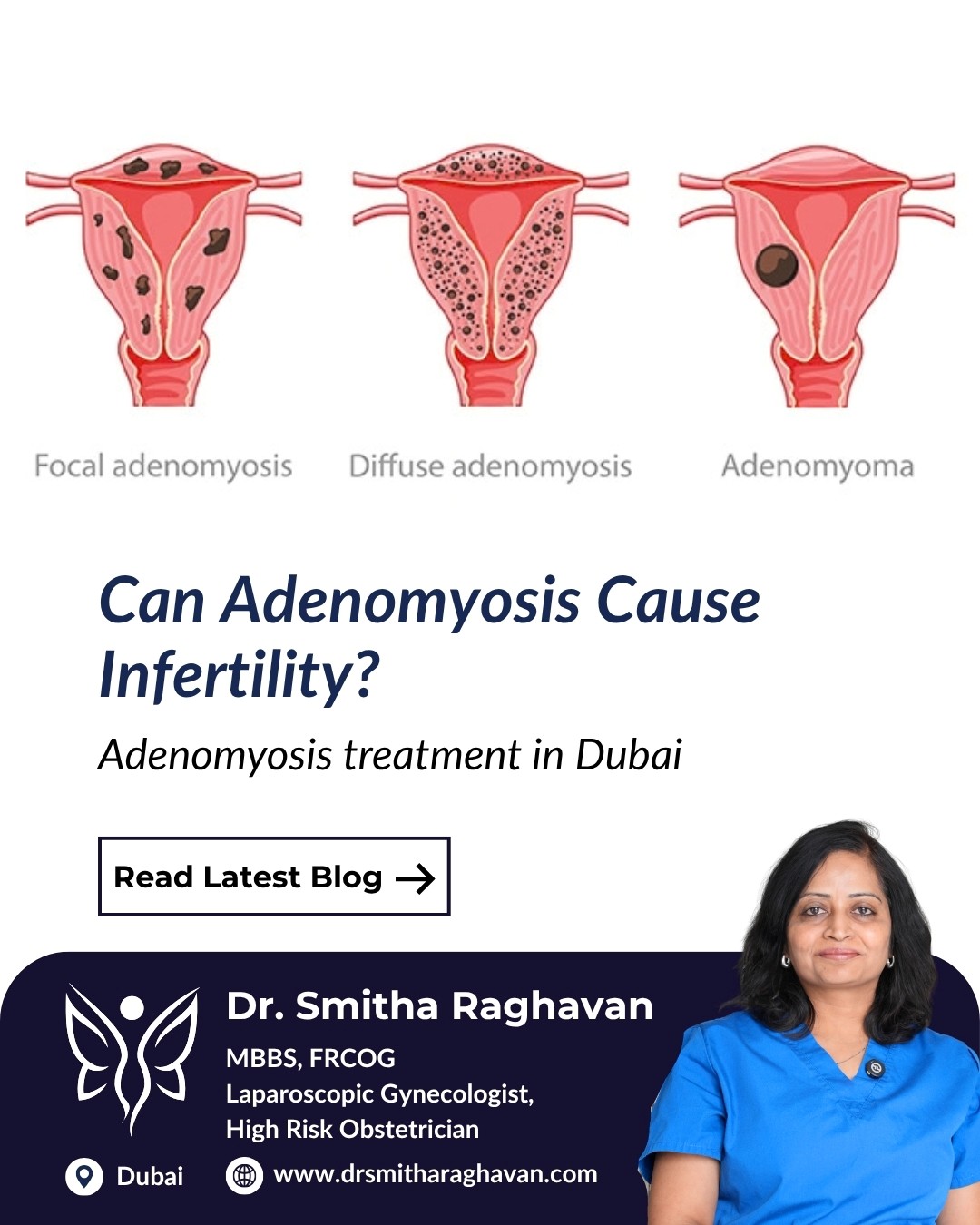
Looking for adenomyosis treatment in Dubai? Learn about symptoms, infertility, diagnosis, medication and minimally invasive treatment options with Dr. Smitha Raghavan.

Infertility is becoming increasingly common among couples in Dubai and across the UAE. Busy lifestyles, delayed marriages, work-related stress, obesity, hormonal disorders, environmental factors, and underlying reproductive conditions are contributing to a growing number of couples struggling to conceive. Fortunately, advances in fertility evaluation and treatment can help identify the root cause and significantly improve the chances of pregnancy.
Lifestyle modifications such as maintaining a healthy weight, managing stress, improving nutrition, and avoiding smoking can enhance fertility naturally. In addition, minimally invasive procedures like laparoscopy can diagnose and treat conditions such as endometriosis, fibroids, ovarian cysts, adhesions, and blocked fallopian tubes, thereby improving reproductive outcomes.
This article explains the common causes of infertility, why infertility is increasing in Dubai, and how lifestyle changes and laparoscopic treatment can help couples achieve their dream of parenthood.
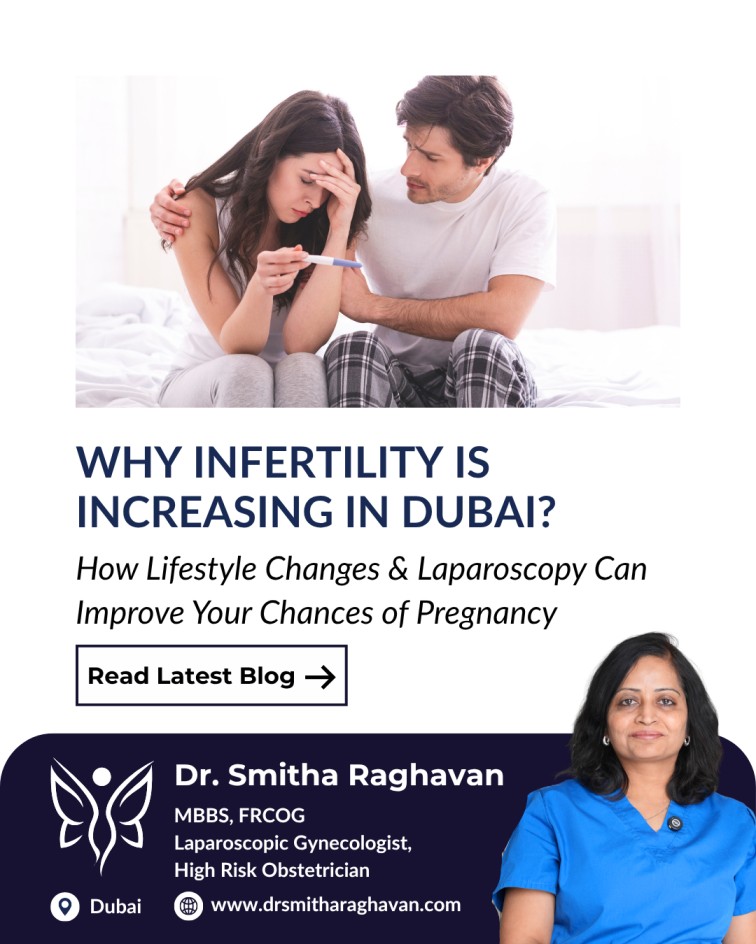
Several social and lifestyle factors are contributing to increasing infertility rates among couples in Dubai:
- Delayed Parenthood
Many couples are prioritizing education, career growth, financial stability, and professional advancement before starting a family. As maternal age increases, fertility naturally declines, particularly after the age of 35.
- High Stress Levels
Dubai’s fast-paced lifestyle, demanding careers, long working hours, and urban pressures can lead to chronic stress, which may negatively affect reproductive hormones and ovulation.
- Obesity and Sedentary Lifestyle
A sedentary lifestyle combined with unhealthy dietary habits has resulted in increasing rates of obesity. Excess body weight can disrupt hormonal balance, ovulation, and sperm quality.
- Polycystic Ovary Syndrome (PCOS)
PCOS is one of the most common causes of female infertility and is increasingly diagnosed among women of reproductive age.
- Environmental and Lifestyle Factors
Smoking, poor sleep patterns, environmental pollutants, and exposure to endocrine-disrupting chemicals may affect fertility in both men and women.
- Male Infertility Factors
Male infertility contributes to nearly 40–50% of infertility cases. Low sperm count, poor sperm motility, hormonal abnormalities, and lifestyle factors can all impact male fertility.
Ovulation Disorders
Ovulation problems account for a significant proportion of female infertility cases. Common causes include:
- PCOS
- Thyroid disorders
- Hyperprolactinemia
- Premature ovarian insufficiency
- Hormonal imbalances
Without regular ovulation, pregnancy becomes difficult to achieve.
Endometriosis
Endometriosis occurs when tissue similar to the uterine lining grows outside the uterus. This condition may cause:
- Pelvic pain
- Painful periods
- Adhesions
- Distorted pelvic anatomy
- Reduced fertility
Many women remain undiagnosed for years before fertility issues arise.
Blocked Fallopian Tubes
Healthy fallopian tubes are essential for fertilization. Blockages may result from:
- Pelvic infections
- Previous surgeries
- Endometriosis
- Tuberculosis
- Pelvic inflammatory disease
When the tubes are blocked, sperm and egg cannot meet naturally.
Uterine Fibroids
Fibroids may interfere with implantation or distort the uterine cavity, reducing fertility and increasing miscarriage risk.
Ovarian Cysts
Certain ovarian cysts, particularly endometriomas, may affect ovarian reserve and reproductive function.
Male fertility can be affected by:
- Low sperm count
- Poor sperm motility
- Abnormal sperm morphology
- Varicocele
- Hormonal disorders
- Smoking
- Obesity
- Excessive heat exposure
- Diabetes
- Stress
A comprehensive fertility evaluation should always include assessment of both partners.
Many fertility problems can be improved through healthy lifestyle modifications.
Maintain a Healthy Weight
Both obesity and being underweight can disrupt reproductive hormones and ovulation. Even a modest weight loss of 5–10% may significantly improve fertility in overweight individuals.
Eat a Fertility-Friendly Diet
A balanced diet rich in:
- Fresh fruits
- Vegetables
- Lean proteins
- Whole grains
- Healthy fats
can support hormonal balance and reproductive health.
Exercise Regularly
Moderate exercise improves:
- Insulin sensitivity
- Hormonal regulation
- Weight management
- Overall reproductive health
Manage Stress
Stress does not directly cause infertility but may affect hormone regulation and reproductive function. Helpful strategies include:
- Yoga
- Meditation
- Mindfulness
- Counseling
- Adequate rest
Improve Sleep Quality
Poor sleep may affect fertility hormones and metabolic health. Aim for 7–8 hours of quality sleep every night.
Avoid Smoking and Excessive Alcohol
Smoking adversely affects:
- Egg quality
- Ovarian reserve
- Sperm count
- Sperm motility
Reducing harmful lifestyle habits can improve fertility outcomes.
Laparoscopy is one of the most valuable tools in modern fertility management.
It is a minimally invasive surgical procedure that allows direct visualization of reproductive organs through tiny incisions.
Unlike ultrasound scans, laparoscopy can detect subtle abnormalities that may otherwise go unnoticed.
Laparoscopy can help diagnose:
- Endometriosis
- Pelvic adhesions
- Blocked fallopian tubes
- Ovarian cysts
- Fibroids
- Congenital reproductive abnormalities
Accurate diagnosis enables targeted treatment and improves fertility outcomes.
Treatment of Endometriosis
Laparoscopic removal of endometriosis lesions can improve natural conception rates.
Removal of Adhesions
Scar tissue may prevent normal egg pickup by the fallopian tubes. Laparoscopic adhesiolysis restores normal pelvic anatomy.
Treatment of Blocked Tubes
Selected tubal blockages can be corrected laparoscopically, improving fertility potential.
Ovarian Cyst Removal
Fertility-preserving laparoscopic surgery can remove problematic cysts while protecting healthy ovarian tissue.
Fibroid Surgery
Laparoscopic myomectomy can improve implantation rates and reproductive outcomes in carefully selected patients.
Consult a fertility specialist if:
- You have been trying to conceive for 12 months without success.
- You are over 35 and have been trying for 6 months.
- You have irregular periods.
- You have known endometriosis or PCOS.
- You have recurrent miscarriages.
- Your partner has known male fertility issues.
Early evaluation often leads to better treatment outcomes.
Infertility is becoming increasingly common in Dubai due to a combination of lifestyle, environmental, and medical factors. However, many causes of infertility are treatable with timely diagnosis and individualized care.
Lifestyle modifications can significantly improve reproductive health, while advanced diagnostic and therapeutic procedures such as laparoscopy can identify and correct underlying fertility problems that may otherwise remain undetected.
Seeking expert evaluation early can help couples understand the cause of infertility and choose the most appropriate treatment pathway toward achieving a healthy pregnancy.
Is infertility becoming more common in Dubai?
Yes. Delayed parenthood, stress, obesity, PCOS, and lifestyle factors are contributing to increasing infertility rates among couples in Dubai.
Can lifestyle changes improve fertility naturally?
Yes. Weight management, healthy nutrition, exercise, stress reduction, and avoiding smoking can significantly improve fertility in many individuals.
Is laparoscopy necessary for every infertility patient?
No. Laparoscopy is recommended when there is suspicion of conditions such as endometriosis, pelvic adhesions, ovarian cysts, fibroids, or tubal disease.
Does laparoscopy improve pregnancy chances?
Yes. By diagnosing and treating fertility-related conditions, laparoscopy can improve natural conception rates and IVF success in selected patients.
How long does recovery take after laparoscopy?
Most patients return to normal activities within a few days to one week, depending on the procedure performed.
When should I seek fertility evaluation?
If pregnancy has not occurred after 12 months of trying (or after 6 months if over 35 years old), professional fertility assessment is recommended.
0
+
Years of Experience
0
+
Babies Delivered
0
+
Surgeries Performed
Consult
Dubai’s Best Gynecologist
Address
• Mediclinic Welcare Hospital, Al Garhoud, Dubai, UAE.
• Mediclinic Deira, City Centre Officer Building, Port Saeed, Adjacent to Pullman Hotel, Dubai, UAE.
For Appointment
+971 54 439 2994
smithardoc@gmail.com
Dr. Smitha Raghavan M.V.
MBBS, FRCOG, CCT (UK),
MSc IHML Laparoscopic Gynecologist &
High-Risk Obstetrician
Specialist Care in Laparoscopy and High-Risk Obstetrics.
Latest Blogs
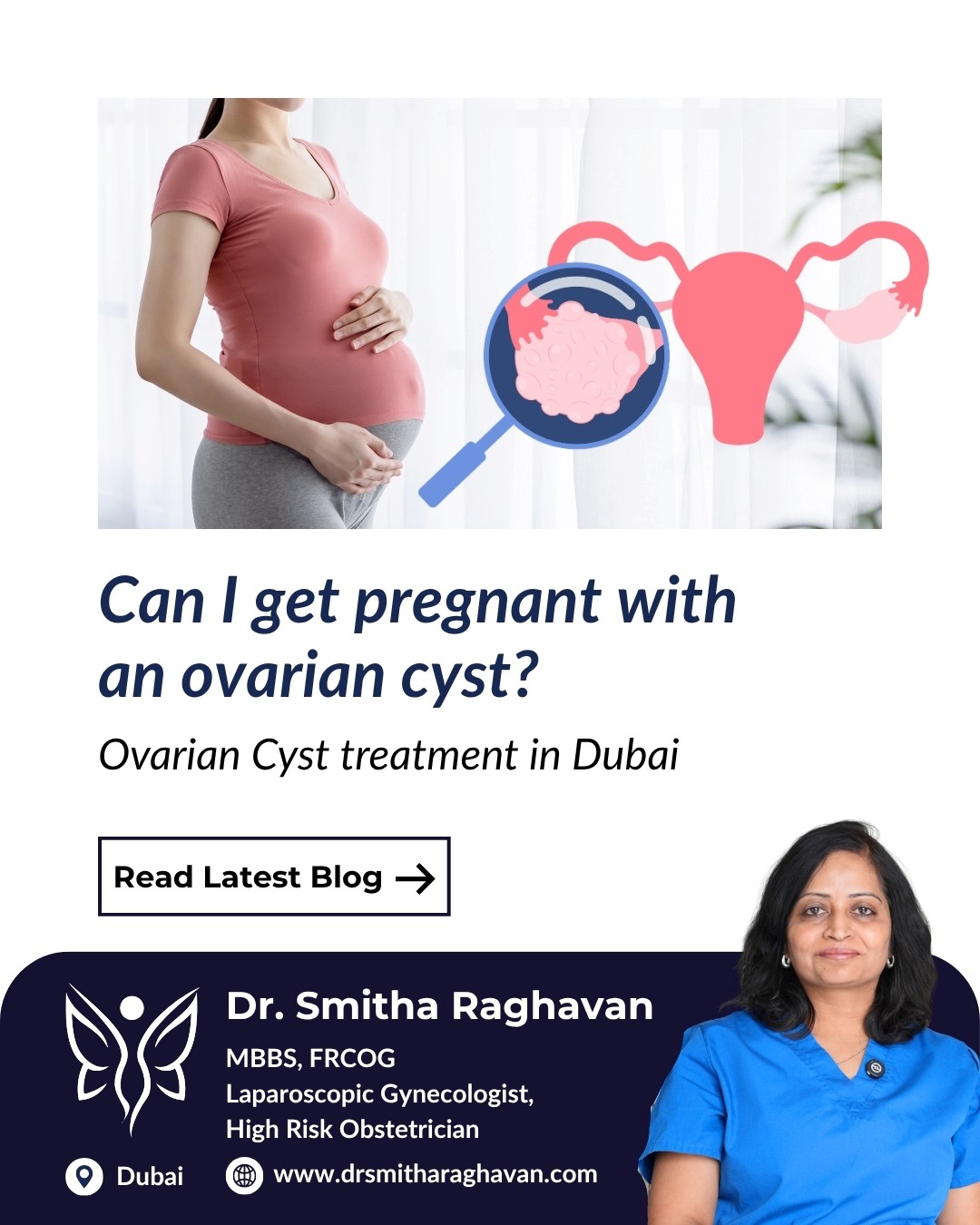
Looking for ovarian cyst treatment in Dubai? Learn about ovarian cyst symptoms, types, diagnosis, fertility effects and laparoscopic cyst removal with Dr. Smitha Raghavan.
Understand the differences between cesarean delivery and normal delivery, their indications, benefits, risks, and recovery. Consult Dr. Smitha Raghavan for expert pregnancy care and cesarean delivery in Dubai.
Concerned about infertility in Dubai? Learn the common causes of infertility, how lifestyle changes improve fertility, and why laparoscopy plays a crucial role in diagnosis and treatment. Expert insights from Dr. Smitha Raghavan.
Services
Pregnancy Care
Complete antenatal and postnatal care for expectant mothers, from low-risk pregnancies to complex high-risk pregnancies involving diabetes, high blood pressure, previous pregnancy loss, premature deliveries, or growth-restricted babies.
Gynecology Treatments
Comprehensive care for women’s health issues including infertility, fibroids, endometriosis, PCOS, menstrual disorders, ovarian cysts, abnormal bleeding, and hormonal imbalances—using evidence-based medical and surgical treatments.
Infertility Care
Personalized evaluation and treatment for female infertility caused by ovulation problems, tubal blockage, endometriosis, PCOS, or unexplained causes, with a strong focus on restoring natural fertility and improving pregnancy outcomes.
Laparoscopic Surgeries
Advanced laparoscopic gynecologic surgeries including laparoscopic hysterectomy, myomectomy, endometriosis surgery, ovarian cystectomy, ectopic pregnancy management, and fertility-preserving procedures for faster recovery.
FAQ
Frequently Asked Questions
1. Where can I consult with Dr. Smitha Raghavan for gynecological concerns in Dubai?
Dr. Smitha Raghavan M.V. is a Consultant Gynecologist practicing at Mediclinic Welcare Hospital and Mediclinic Deira, Dubai. Patients seeking world-class care in a premium hospital setting can easily book appointments at these locations for both routine check-ups and advanced surgical consultations.
2. What are the advantages of choosing Laparoscopic Surgery (Keyhole Surgery) in Dubai?
As a leading Laparoscopic Surgeon in Dubai, Dr. Smitha utilizes minimally invasive techniques for treating fibroids, ovarian cysts, and endometriosis. The primary benefits for our patients include significantly less postoperative pain, minimal scarring, a lower risk of infection, and a much faster return to daily activities compared to traditional open surgery.
3. What qualifies a pregnancy as "high-risk," and how is it managed?
A pregnancy is considered “high-risk” if there are potential complications affecting the mother or baby, such as gestational diabetes, hypertension (pre-eclampsia), or multiple births (twins) etc. As a High-Risk Obstetrician in Dubai, Dr. Smitha provides specialized monitoring and personalized birth plans to ensure the safest possible outcome for complex pregnancies.
4. Do you offer second opinions for gynecological surgery in Dubai?
Yes. Many patients visit Dr. Smitha at Mediclinic for a second opinion regarding hysterectomy or fibroid surgery. As an expert in advanced laparoscopy, she specializes in providing minimally invasive alternatives to traditional open surgery.
5. How can I prepare for my first consultation at Mediclinic Dubai?
For your first visit, please bring any previous medical records, recent ultrasound reports, or blood test results. Whether you are visiting for gynecological surgery or antenatal care, Dr. Smitha ensures a comprehensive evaluation. You can contact us at +971 54 439 2994 to confirm an appointment.