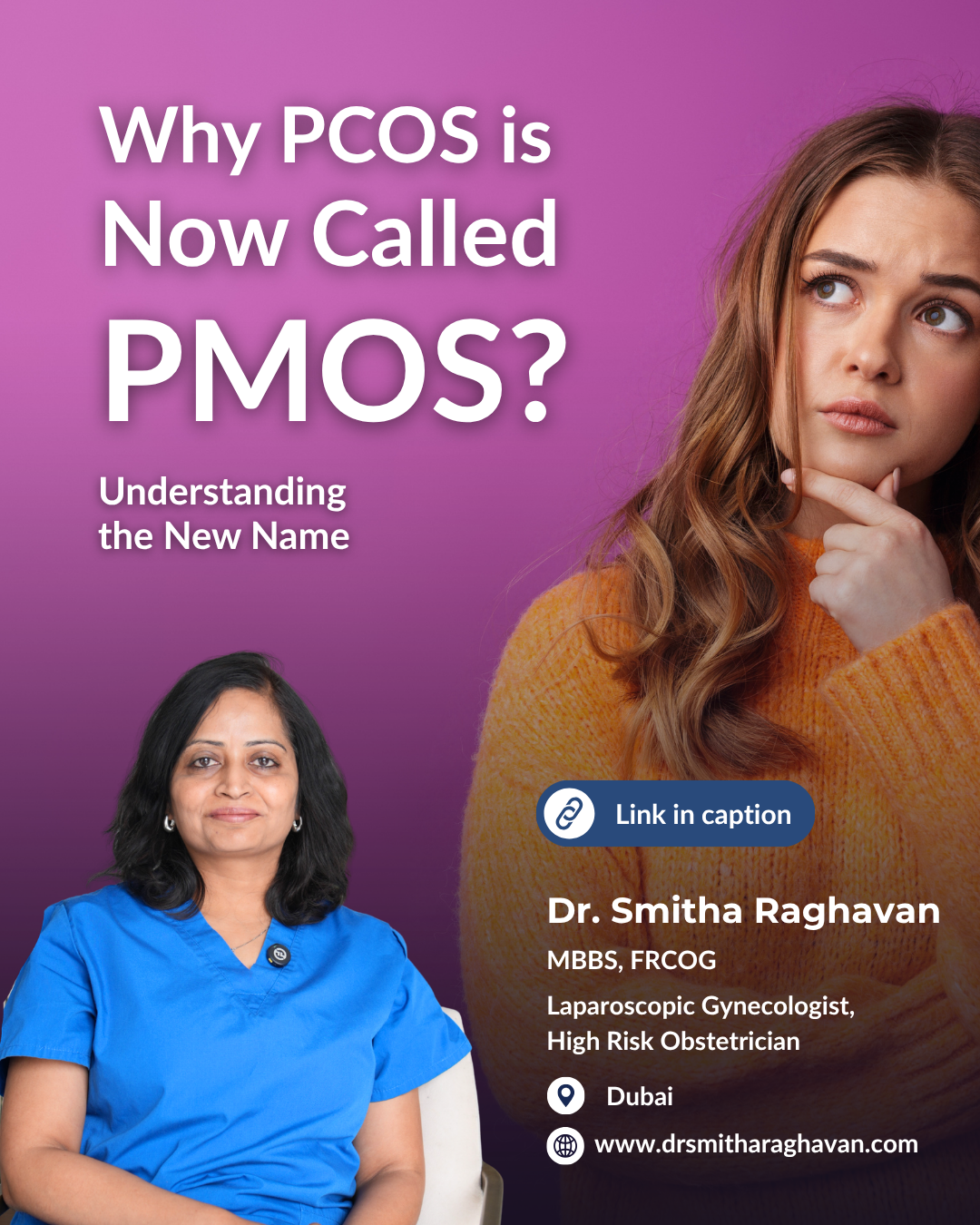
For years, millions of women around the world have been diagnosed with PCOS (Polycystic Ovary Syndrome). However, in 2026, an international medical consensus published in The Lancet officially renamed PCOS to PMOS — Polyendocrine Metabolic Ovarian Syndrome.

Because experts now recognize that this condition is not just about ovarian cysts or infertility. It is a complex hormonal and metabolic disorder that affects:

  • Hormones
  • Ovulation
  • Metabolism
  • Insulin resistance
  • Weight
  • Skin and hair
  • Mental health
  • Fertility
  • Long-term health risks like diabetes and heart disease

Many women diagnosed with PCOS do not even have ovarian cysts, which made the old name misleading. The new term PMOS better reflects the true nature of the condition.

Globally, PMOS affects approximately 1 in 8 women, with over 170 million women worldwide living with the condition.

Studies from the Middle East and UAE suggest that PCOS/PMOS prevalence among women is significantly high due to:

  • Sedentary lifestyle
  • Obesity and insulin resistance
  • Stress
  • Dietary habits
  • Genetic factors

In the UAE, estimates suggest that approximately 13–20% of women of reproductive age may be affected by PCOS/PMOS, making it one of the leading causes of infertility among women in Dubai and the Middle East.

Unfortunately, nearly 70% of affected women remain undiagnosed globally, often suffering silently with irregular periods, acne, weight gain, infertility, and hormonal imbalance.

Q1. What is PMOS (formerly PCOS)?

PMOS stands for Polyendocrine Metabolic Ovarian Syndrome.

It is a hormonal and metabolic disorder that affects ovulation, menstrual cycles, insulin levels, and reproductive health.

Women with PMOS may experience:

  • Irregular periods
  • Delayed or absent ovulation
  • Weight gain
  • Acne
  • Excess facial hair
  • Hair thinning
  • Difficulty conceiving
  • Mood changes
  • Insulin resistance

The condition varies from woman to woman.

Medical experts felt that the term “PCOS” was inaccurate because:

  • Not all women have ovarian cysts
  • The condition affects the entire endocrine and metabolic system
  • The old name caused misunderstanding and delayed diagnosis

The new name PMOS highlights the broader hormonal and metabolic impact of the condition.

Common symptoms include:

  • Irregular or missed periods
  • Difficulty getting pregnant
  • Excess facial or body hair
  • Acne and oily skin
  • Weight gain
  • Hair fall or thinning
  • Dark skin patches
  • Mood swings
  • Fatigue
  • Insulin resistance

Some women may have lean PMOS without obesity.

Yes.

PMOS is one of the leading causes of female infertility because it affects ovulation.

When ovulation becomes irregular or absent, natural conception becomes difficult.

However, with proper treatment, many women successfully conceive naturally or with fertility support.

Lifestyle changes are extremely important in managing PMOS.

Recommended measures include:

  • Weight management
  • Regular exercise
  • Low sugar and low processed food diet
  • Stress reduction
  • Proper sleep
  • Reducing insulin resistance

Even a 5–10% weight reduction may improve ovulation and hormonal balance in many women.

Treatment depends on symptoms and fertility goals.

At Dr. Smitha Raghavan’s clinic, treatment may include:

Hormonal Management

  • Oral contraceptive pills
  • Hormonal regulation
  • Menstrual cycle management

Insulin Resistance Treatment

  • Metformin
  • Dietary guidance
  • Weight management

Fertility Treatment

  • Ovulation induction
  • Follicular monitoring
  • Fertility optimization
  • IVF referral when required

Skin & Hair Symptoms Management

  • Acne treatment
  • Hair growth management
  • Hormonal correction

Advanced Gynecological Evaluation

  • Ultrasound evaluation
  • Hormonal testing
  • Metabolic screening

Absolutely.

Many women with PMOS conceive successfully after:

  • Lifestyle modifications
  • Ovulation induction treatment
  • Hormonal balancing
  • Fertility support

Early diagnosis and proper treatment significantly improve fertility outcomes.

Absolutely.

Many women with PMOS conceive successfully after:

  • Lifestyle modifications
  • Ovulation induction treatment
  • Hormonal balancing
  • Fertility support

Early diagnosis and proper treatment significantly improve fertility outcomes.

No.

PMOS is now understood as a full-body metabolic and endocrine condition.

It can increase the risk of:

  • Type 2 diabetes
  • High cholesterol
  • Obesity
  • Sleep disorders
  • Anxiety and depression
  • Cardiovascular disease

This is one of the main reasons experts changed the name from PCOS to PMOS.

The shift from PCOS to PMOS marks an important advancement in women’s healthcare.

It recognizes that this condition is not simply about ovarian cysts — it is a complex hormonal and metabolic disorder affecting millions of women worldwide.

With early diagnosis, proper medical guidance, lifestyle management, and fertility support, women with PMOS can lead healthy lives and achieve successful pregnancies.

If you are struggling with irregular periods, hormonal imbalance, acne, weight gain, or infertility, expert evaluation can help identify the root cause and guide effective treatment.

Consult Dr. Smitha Raghavan in Dubai for personalized PCOS/PMOS care and fertility guidance.

0 +

Years of Experience

0 +

Babies Delivered

0 +

Surgeries Performed

Consult

Dubai’s Best Gynecologist

Address​

• Mediclinic Welcare Hospital, Al Garhoud, Dubai, UAE.
• Mediclinic Deira, City Centre Officer Building, Port Saeed, Adjacent to Pullman Hotel, Dubai, UAE.

For Appointment

+971 54 439 2994

Email

smithardoc@gmail.com

Dr. Smitha Raghavan M.V.

MBBS, FRCOG, CCT (UK),
MSc IHML Laparoscopic Gynecologist &
High-Risk Obstetrician

Specialist Care in Laparoscopy and High-Risk Obstetrics.

Latest Blogs

female infertility specialist Dubai

Concerned about infertility in Dubai? Learn the common causes of infertility, how lifestyle changes improve fertility, and why laparoscopy plays a crucial role in diagnosis and treatment. Expert insights from Dr. Smitha Raghavan.

PCOS is now PMOS by Dr.Smitha Raghavan

Looking for PCOS treatment in Dubai? Learn why PCOS is now called PMOS, symptoms, causes, infertility treatment, and expert care by Dr. Smitha Raghavan, laparoscopic gynecologist in Dubai.

Fibroids treatment in Dubai Dr. Smitha Raghavan, Laparoscopic Gynecologist

Learn how fibroids affect fertility, their symptoms, diagnosis, and advanced laparoscopic fibroids treatment in Dubai by Dr. Smitha Raghavan.

Endometriosis Treatment in Dubai

Learn about endometriosis symptoms, diagnosis, infertility issues, and advanced laparoscopic treatment options in Dubai. Dr. Smitha Raghavan, endometriosis expert, explains everything in a detailed Q&A guide.

Services

Pregnancy Care

Complete antenatal and postnatal care for expectant mothers, from low-risk pregnancies to complex high-risk pregnancies involving diabetes, high blood pressure, previous pregnancy loss, premature deliveries, or growth-restricted babies.

Gynecology Treatments

Comprehensive care for women’s health issues including infertility, fibroids, endometriosis, PCOS, menstrual disorders, ovarian cysts, abnormal bleeding, and hormonal imbalances—using evidence-based medical and surgical treatments.

Infertility Care

Personalized evaluation and treatment for female infertility caused by ovulation problems, tubal blockage, endometriosis, PCOS, or unexplained causes, with a strong focus on restoring natural fertility and improving pregnancy outcomes.

Laparoscopic Surgeries

Advanced laparoscopic gynecologic surgeries including laparoscopic hysterectomy, myomectomy, endometriosis surgery, ovarian cystectomy, ectopic pregnancy management, and fertility-preserving procedures for faster recovery.

FAQ

Frequently Asked Questions

1. Where can I consult with Dr. Smitha Raghavan for gynecological concerns in Dubai?

Dr. Smitha Raghavan M.V. is a Consultant Gynecologist practicing at Mediclinic Welcare Hospital and Mediclinic Deira, Dubai. Patients seeking world-class care in a premium hospital setting can easily book appointments at these locations for both routine check-ups and advanced surgical consultations.

As a leading Laparoscopic Surgeon in Dubai, Dr. Smitha utilizes minimally invasive techniques for treating fibroids, ovarian cysts, and endometriosis. The primary benefits for our patients include significantly less postoperative pain, minimal scarring, a lower risk of infection, and a much faster return to daily activities compared to traditional open surgery.

A pregnancy is considered “high-risk” if there are potential complications affecting the mother or baby, such as gestational diabetes, hypertension (pre-eclampsia), or multiple births (twins) etc. As a High-Risk Obstetrician in Dubai, Dr. Smitha provides specialized monitoring and personalized birth plans to ensure the safest possible outcome for complex pregnancies.

Yes. Many patients visit Dr. Smitha at Mediclinic for a second opinion regarding hysterectomy or fibroid surgery. As an expert in advanced laparoscopy, she specializes in providing minimally invasive alternatives to traditional open surgery.

For your first visit, please bring any previous medical records, recent ultrasound reports, or blood test results. Whether you are visiting for gynecological surgery or antenatal care, Dr. Smitha ensures a comprehensive evaluation. You can contact us at +971 54 439 2994 to confirm an appointment.

Scroll to Top