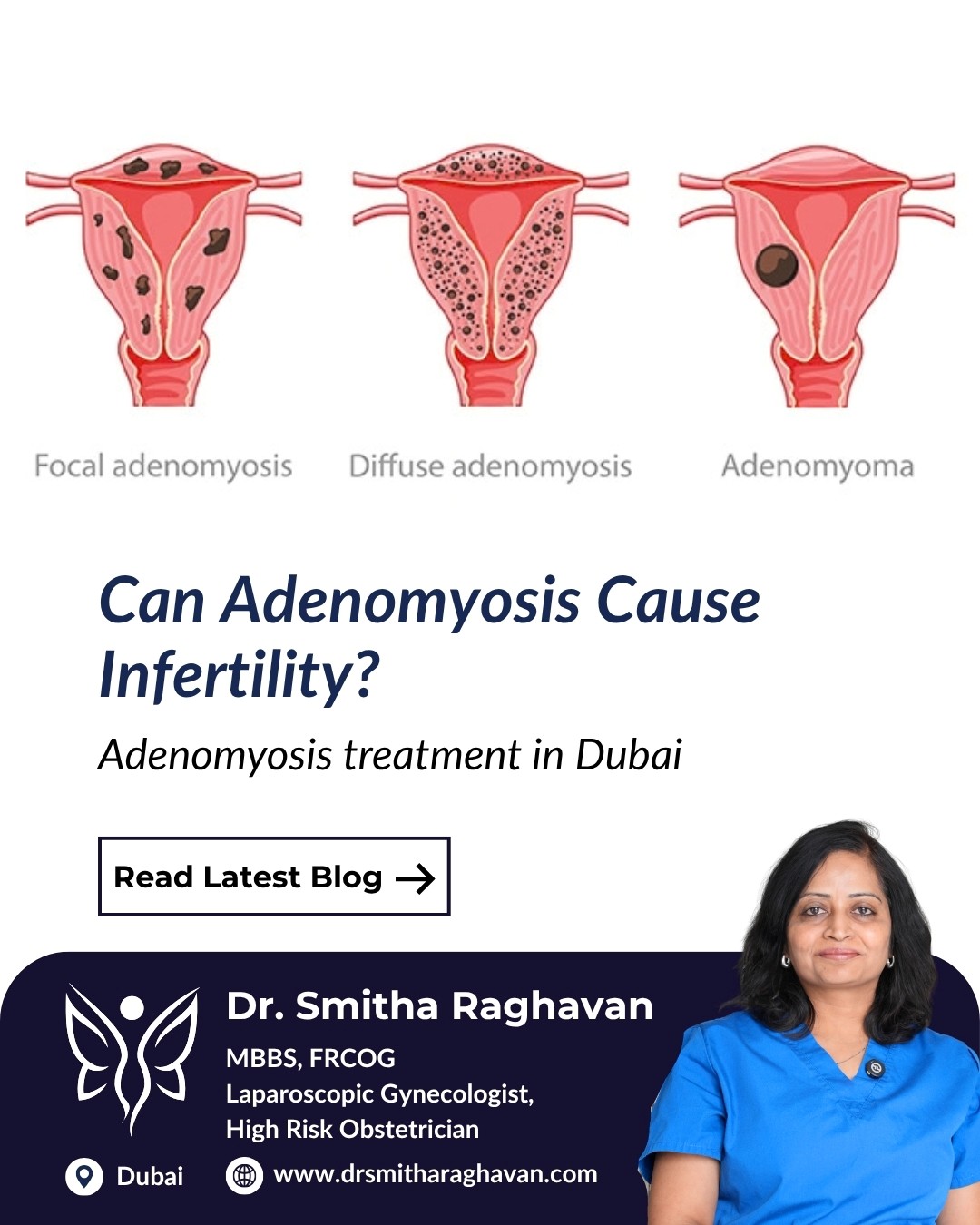
Looking for adenomyosis treatment in Dubai? Learn about symptoms, infertility, diagnosis, medication and minimally invasive treatment options with Dr. Smitha Raghavan.

An ovarian cyst is a fluid-filled sac or tissue-filled growth that develops in or on an ovary. Ovarian cysts are common, particularly during the reproductive years, and many are harmless and disappear without treatment. However, some cysts can cause pain, affect fertility, grow larger or have features that require closer evaluation.
If you have been diagnosed with an ovarian cyst and are looking for ovarian cyst treatment in Dubai, Dr. Smitha Raghavan, Consultant Obstetrician and Laparoscopic Gynecologist, provides evaluation and minimally invasive surgical treatment when required.
Dr. Smitha Raghavan is a UK-trained gynecologist with expertise in laparoscopic gynecological surgery, including ovarian cystectomy and fertility-preserving procedures.
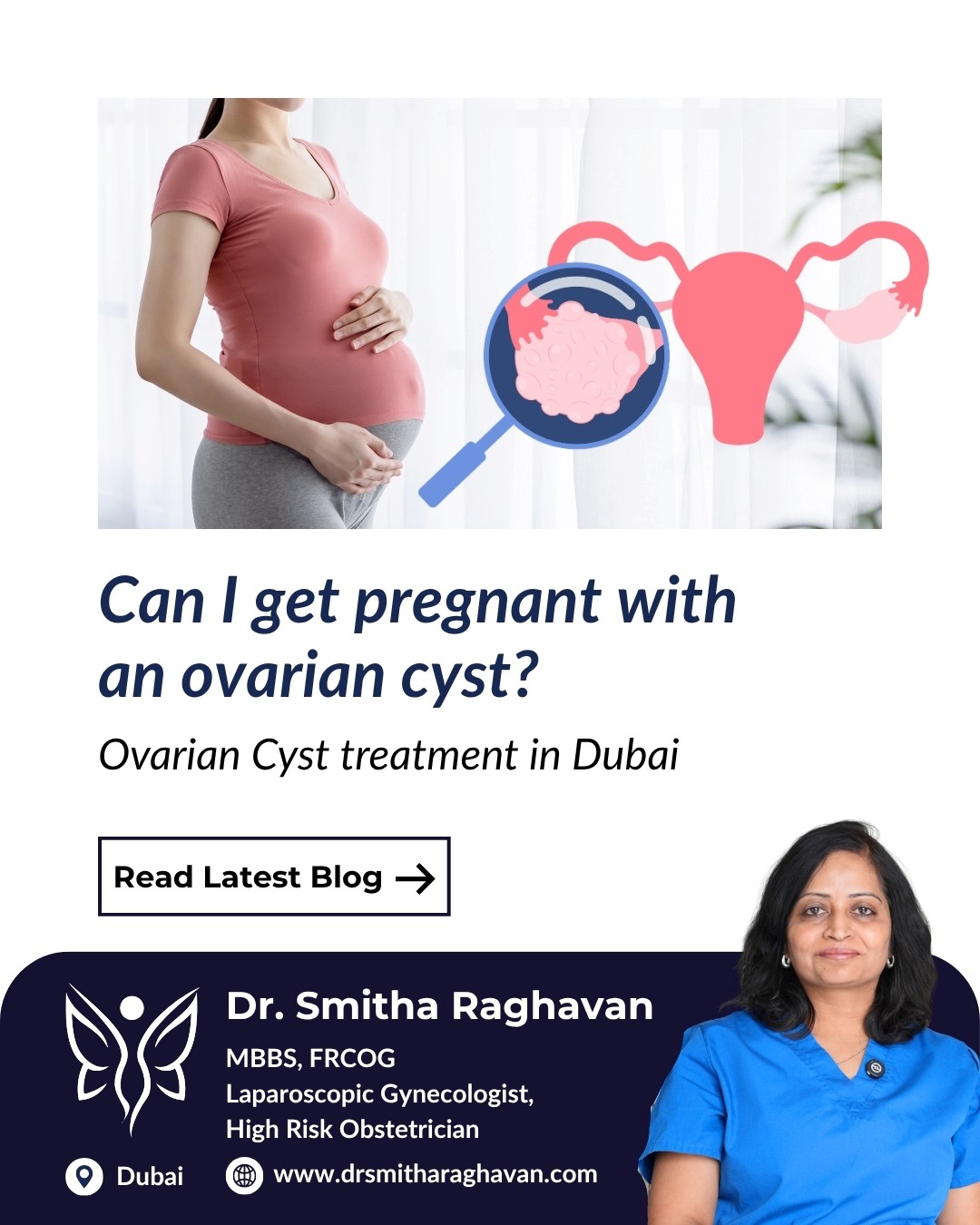
An ovarian cyst is a sac that develops in or on an ovary. Some cysts develop naturally during the menstrual cycle and disappear on their own. Others may be related to conditions such as endometriosis or may require surgical evaluation.
The important point is that not every ovarian cyst needs surgery.
Treatment depends on factors such as:
- Size of the cyst
- Appearance on ultrasound
- Type of cyst
- Symptoms
- Age and menopausal status
- Whether the cyst is growing
- Fertility plans
- Whether there are features that raise concern about malignancy
Many simple cysts can be safely monitored with follow-up scans.
Some commonly encountered ovarian cysts include:
- Functional cysts
These are associated with the normal menstrual cycle and are the most common type. Many disappear spontaneously within a few weeks or menstrual cycles.
- Endometrioma
An endometrioma develops when endometriosis affects the ovary. It may be associated with painful periods, pelvic pain and difficulty conceiving.
- Dermoid cyst
Also called a mature cystic teratoma, a dermoid is a benign ovarian tumour that can contain different types of tissue.
- Cystadenoma
These benign cystic tumours develop from the surface of the ovary and can sometimes become quite large.
- Complex ovarian cysts
A cyst may be described as complex when it contains solid areas, septations or other features that require further assessment rather than simple observation.
The appearance of a cyst on ultrasound is often more important than its size alone when deciding the next step.
Many ovarian cysts cause no symptoms and are discovered incidentally during an ultrasound.
When symptoms occur, they may include:
- Lower abdominal or pelvic pain
- Pain on one side of the abdomen
- Painful periods
- Pain during sexual intercourse
- Abdominal bloating or swelling
- Feeling full quickly
- Frequent or urgent urination
- Changes in menstrual pattern
- Difficulty becoming pregnant
Large cysts can sometimes cause pressure symptoms. A cyst can also occasionally rupture or cause ovarian torsion, resulting in sudden and severe pain.
A detailed gynecological assessment is usually the first step.
Pelvic ultrasound
Ultrasound is one of the most important investigations. It can help assess:
- Size of the cyst
- Location
- Whether it is fluid-filled or contains solid components
- Internal septations
- Blood flow and other characteristics
- The appearance of both ovaries
A transvaginal ultrasound may provide a more detailed assessment of the ovaries in appropriate patients.
Blood tests
Blood tests may sometimes be recommended, particularly when an ultrasound shows a complex or suspicious ovarian mass. CA-125 and other tests may be considered depending on age, menopausal status and ultrasound findings.
An elevated CA-125 does not automatically mean ovarian cancer, because it can increase in several benign conditions as well.
MRI or additional imaging
For selected large or complex cysts, MRI or other imaging may be recommended when ultrasound does not provide enough information.
No.
Many simple ovarian cysts do not require surgery. If the cyst is small, appears benign and is not causing significant symptoms, your gynecologist may recommend observation with a repeat ultrasound.
This approach is often called watchful waiting.
The aim is to avoid unnecessary surgery while making sure that a cyst that persists, grows or changes is appropriately reassessed.
Surgery may be considered when:
- The cyst is large
- It continues to grow
- It persists despite observation
- It causes significant or persistent symptoms
- The cyst has complex or suspicious features
- There is concern about torsion
- The cyst is associated with endometriosis and requires treatment
- There is concern about malignancy
The decision is individualised rather than based on size alone.
The patient’s age, symptoms, ultrasound appearance, medical history and fertility plans are all important when deciding whether surgery is appropriate.
When surgery is required and the cyst appears suitable for minimally invasive treatment, laparoscopic ovarian cystectomy may be performed.
Laparoscopy, commonly called keyhole surgery, involves using small abdominal incisions and a camera to examine and operate on the pelvic organs.
During a laparoscopic cystectomy, the surgeon aims to remove the cyst while preserving as much healthy ovarian tissue as possible, particularly in women who wish to become pregnant.
Potential advantages of minimally invasive surgery include smaller incisions, less postoperative discomfort, shorter hospital stay and faster recovery compared with traditional open surgery in appropriately selected cases.
Dr. Smitha Raghavan performs laparoscopic gynecological procedures including ovarian cystectomy and other fertility-preserving laparoscopic surgeries in Dubai.
This depends largely on the type of cyst.
Many functional ovarian cysts do not affect fertility and resolve naturally.
However, conditions such as endometriosis and endometriomas can be associated with difficulty conceiving. In addition, very large cysts or certain ovarian conditions may affect normal ovarian function.
Surgery itself can also potentially affect ovarian reserve, particularly when ovarian tissue is inadvertently removed or when surgery involves both ovaries. Therefore, fertility preservation should be an important consideration before operating on a woman who wishes to conceive.
The goal should not simply be “remove the cyst”; it should be to treat the problem while preserving ovarian function whenever medically possible.
Yes. Recurrence depends on the type of cyst.
For example, endometriomas can recur because the underlying condition is endometriosis. Functional cysts can also develop again because they are related to the normal ovarian cycle.
Your gynecologist can discuss the expected recurrence risk and whether follow-up is required.
Is an ovarian cyst dangerous?
Most ovarian cysts are benign. However, some cysts may require further evaluation depending on their appearance, size, symptoms and the patient’s age.
Can an ovarian cyst disappear on its own?
Yes. Many functional ovarian cysts disappear naturally over one or two menstrual cycles without surgery.
Does a 5 cm ovarian cyst require surgery?
Not necessarily. The decision depends on the type and appearance of the cyst, symptoms, age and other clinical factors. A simple cyst may simply require monitoring, whereas a complex or symptomatic cyst may need further assessment.
Can I get pregnant with an ovarian cyst?
Yes, many women with ovarian cysts become pregnant normally. However, fertility can be affected by certain conditions, particularly endometriosis and endometriomas. Your individual fertility goals should be considered before deciding on surgery.
Is laparoscopic ovarian cyst surgery painful?
Laparoscopic surgery generally causes less postoperative pain and allows faster recovery than open abdominal surgery, although some discomfort is expected after any operation.
Will my ovary be removed during cyst surgery?
Not usually. When appropriate, the aim is often to remove only the cyst and preserve the ovary. However, removal of an ovary may occasionally be necessary if the ovary has been severely damaged, completely replaced by a cyst, has undergone torsion with loss of blood supply, or malignancy is suspected.
Can ovarian cysts cause infertility?
Most ovarian cysts do not cause infertility. However, ovarian endometriomas and the underlying endometriosis associated with them can affect fertility.
When should I seek urgent medical attention?
Sudden severe pelvic or abdominal pain, particularly when accompanied by vomiting, dizziness, weakness or fainting, requires urgent medical assessment because ovarian torsion or cyst rupture may need emergency treatment.
Should I get a second opinion before ovarian cyst surgery?
A second opinion can be useful if surgery has been recommended, particularly if you are young, planning pregnancy, have a complex cyst, have an endometrioma or have been advised that the ovary may need to be removed.
If you have been diagnosed with an ovarian cyst, do not assume that surgery is always necessary. A detailed evaluation can help determine whether observation, medical management or laparoscopic surgery is most appropriate for you.
Dr. Smitha Raghavan provides gynecological evaluation and minimally invasive laparoscopic treatment for ovarian cysts in Dubai.
Consultation locations include Mediclinic Welcare Hospital, Al Garhoud, and Mediclinic Deira, Dubai.
0
+
Years of Experience
0
+
Babies Delivered
0
+
Surgeries Performed
Consult
Dubai’s Best Gynecologist
Address
• Mediclinic Welcare Hospital, Al Garhoud, Dubai, UAE.
• Mediclinic Deira, City Centre Officer Building, Port Saeed, Adjacent to Pullman Hotel, Dubai, UAE.
For Appointment
+971 54 439 2994
smithardoc@gmail.com

Dr. Smitha Raghavan M.V.
MBBS, FRCOG, CCT (UK),
MSc IHML Laparoscopic Gynecologist &
High-Risk Obstetrician
Specialist Care in Laparoscopy and High-Risk Obstetrics.
Latest Blogs
Looking for ovarian cyst treatment in Dubai? Learn about ovarian cyst symptoms, types, diagnosis, fertility effects and laparoscopic cyst removal with Dr. Smitha Raghavan.
Understand the differences between cesarean delivery and normal delivery, their indications, benefits, risks, and recovery. Consult Dr. Smitha Raghavan for expert pregnancy care and cesarean delivery in Dubai.
Concerned about infertility in Dubai? Learn the common causes of infertility, how lifestyle changes improve fertility, and why laparoscopy plays a crucial role in diagnosis and treatment. Expert insights from Dr. Smitha Raghavan.
Services
Pregnancy Care
Complete antenatal and postnatal care for expectant mothers, from low-risk pregnancies to complex high-risk pregnancies involving diabetes, high blood pressure, previous pregnancy loss, premature deliveries, or growth-restricted babies.
Gynecology Treatments
Comprehensive care for women’s health issues including infertility, fibroids, endometriosis, PCOS, menstrual disorders, ovarian cysts, abnormal bleeding, and hormonal imbalances—using evidence-based medical and surgical treatments.
Infertility Care
Personalized evaluation and treatment for female infertility caused by ovulation problems, tubal blockage, endometriosis, PCOS, or unexplained causes, with a strong focus on restoring natural fertility and improving pregnancy outcomes.
Laparoscopic Surgeries
Advanced laparoscopic gynecologic surgeries including laparoscopic hysterectomy, myomectomy, endometriosis surgery, ovarian cystectomy, ectopic pregnancy management, and fertility-preserving procedures for faster recovery.
FAQ
Frequently Asked Questions
1. Where can I consult with Dr. Smitha Raghavan for gynecological concerns in Dubai?
Dr. Smitha Raghavan M.V. is a Consultant Gynecologist practicing at Mediclinic Welcare Hospital and Mediclinic Deira, Dubai. Patients seeking world-class care in a premium hospital setting can easily book appointments at these locations for both routine check-ups and advanced surgical consultations.
2. What are the advantages of choosing Laparoscopic Surgery (Keyhole Surgery) in Dubai?
As a leading Laparoscopic Surgeon in Dubai, Dr. Smitha utilizes minimally invasive techniques for treating fibroids, ovarian cysts, and endometriosis. The primary benefits for our patients include significantly less postoperative pain, minimal scarring, a lower risk of infection, and a much faster return to daily activities compared to traditional open surgery.
3. What qualifies a pregnancy as "high-risk," and how is it managed?
A pregnancy is considered “high-risk” if there are potential complications affecting the mother or baby, such as gestational diabetes, hypertension (pre-eclampsia), or multiple births (twins) etc. As a High-Risk Obstetrician in Dubai, Dr. Smitha provides specialized monitoring and personalized birth plans to ensure the safest possible outcome for complex pregnancies.
4. Do you offer second opinions for gynecological surgery in Dubai?
Yes. Many patients visit Dr. Smitha at Mediclinic for a second opinion regarding hysterectomy or fibroid surgery. As an expert in advanced laparoscopy, she specializes in providing minimally invasive alternatives to traditional open surgery.
5. How can I prepare for my first consultation at Mediclinic Dubai?
For your first visit, please bring any previous medical records, recent ultrasound reports, or blood test results. Whether you are visiting for gynecological surgery or antenatal care, Dr. Smitha ensures a comprehensive evaluation. You can contact us at +971 54 439 2994 to confirm an appointment.